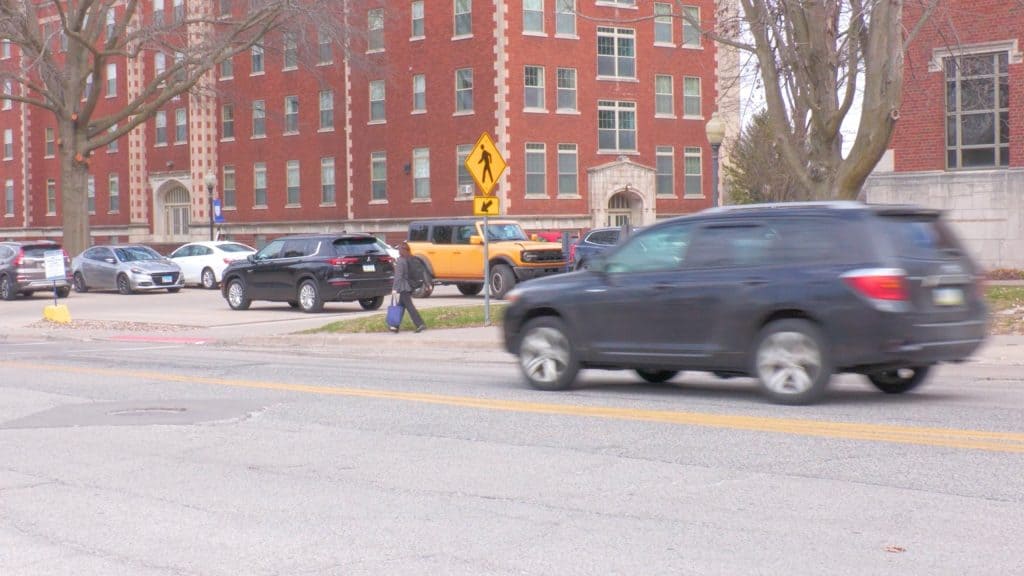
SAU Food Pantry. Photo Courtesy of Casper Altman.
Iowa residents are facing rising costs in groceries, healthcare, and utilities, yet many are finding ways to cope with these growing affordability challenges. According to an article by Luke Martz, Governor Kim Reynolds and Republican leadership say that “Iowa has officially claimed the title of being the most affordable state in the nation,” suggesting the state has been insulated from broader economic pressures.
However, the everyday experiences of students tell a more complex story. Rising costs are pushing Iowans to adjust their spending, seek additional sources of income, and rely more heavily on community support. Students at St. Ambrose University point to increased use of food pantries, higher gas prices, and rising grocery costs as clear signs that affordability remains a significant concern.
SAU Food Pantry Use Up
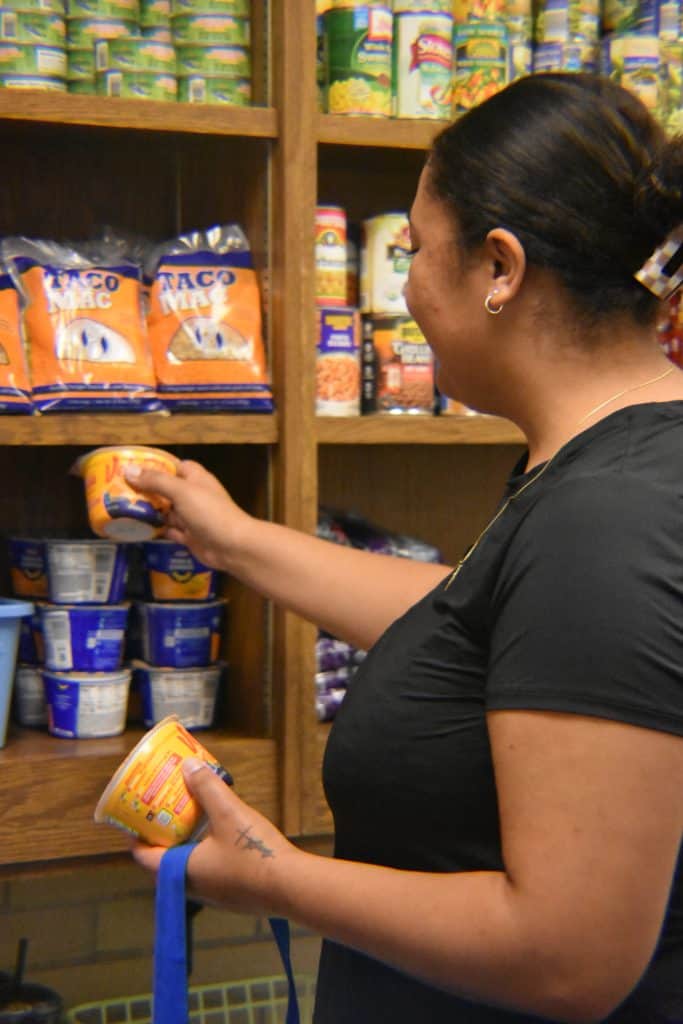
Elaina Madlom runs the St. Ambrose food pantry on campus. She is a freshman majoring in psychology, social work, and prelaw. Madlom says there has been an increase in the usage of people using the food pantry for groceries.
“We have seen an increase in usage from mostly international students. It was surprising how many students responded with yes, they needed food assistance up until the week before spring break.”
She talks about the importance of food pantry and how much it matters to her.
“I think it allows students to have somewhere safe to go and give them some stability, not necessarily created for stability. So, it gives that extra support, that safety net. I think personally why it matters so much to me is because, I have a bunch of friends who didn’t know about the food pantry and they were overworking themselves, and if they just had known about the food pantry, they could have prioritized more.”
Madlom says students didn’t know Ambrose had food pantry, and her friends were working so hard and paying for tuition on top of that. The St. Ambrose food pantry is located at the lower level of the Chapel, and all students are welcomed to grab whatever they need.
Fuel Costs Add Pressure for Commuting Students
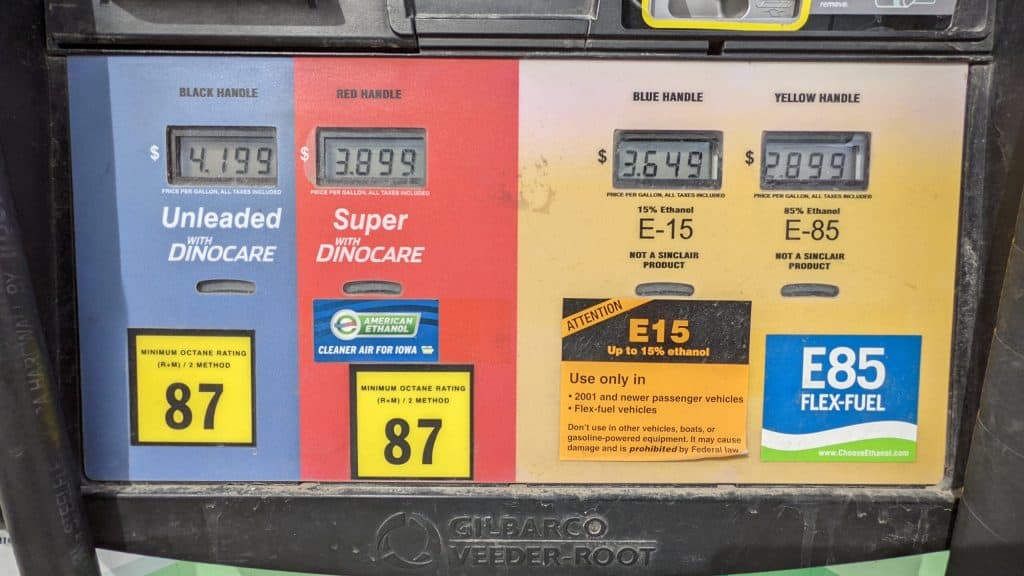
As of April, Gas prices in Iowa have gone up to an average of $4.14 from last year being $3.22 a gallon. This places a burden on residents who rely heavily on driving to work, school, and just daily activities. As prices at the pump increase, St Ambrose students are forced to change routines to cut back spendings on gas.
SAU human performance and fitness major Caitlyn Bates says, “I live 3 and a half hours away from campus and without having an off-campus job, and a work study that pays for school, it makes it extremely hard to go visit home.. even on breaks. I am lucky enough to have people who care about me to help me with gas, but without them, it would be very hard for me to even go home. And while at school, I don’t drive anywhere because of this. I don’t want to risk wasting gas.”
Others who don’t have a car on campus also raise concerns about what our government is doing about it.
Political science and international studies major Jack Breaky say, “I love the fact of being promised by an administration to lower gas prices which I was honestly excited about. Now that the administration believes war is the best way forward for this nation, the idea of helping Americans or “America First” has been a joke.
It’s regular for me to pay for gas when I am home. I remember when it was nearly 4 bucks a gallon in my part of Chicago, which is rare. For my family, most of us commute 30-40 minutes for work or school. Plus, it’s not even gas prices but household items. I just hope this doesn’t impact us like what happened in 2022.”
In Iowa, SAU college students say they face concerns regarding grocery costs, leading to food insecurity. The United States Government Accountability Office says 3.8 million college students nationwide struggle with food insecurity.
While Governor Kim Reynolds highlight Iowa’s reputation for affordability, the reality for many students tells a different story. Rising costs in essential areas like groceries, healthcare, utilities, and gas continue to strain household budgets.
As a result, Iowans are adapting by cutting expenses, finding additional income, and leaning on community resources like food pantries. These efforts demonstrate resilience, but they also reveal that affordability remains an ongoing challenge for many across the state.