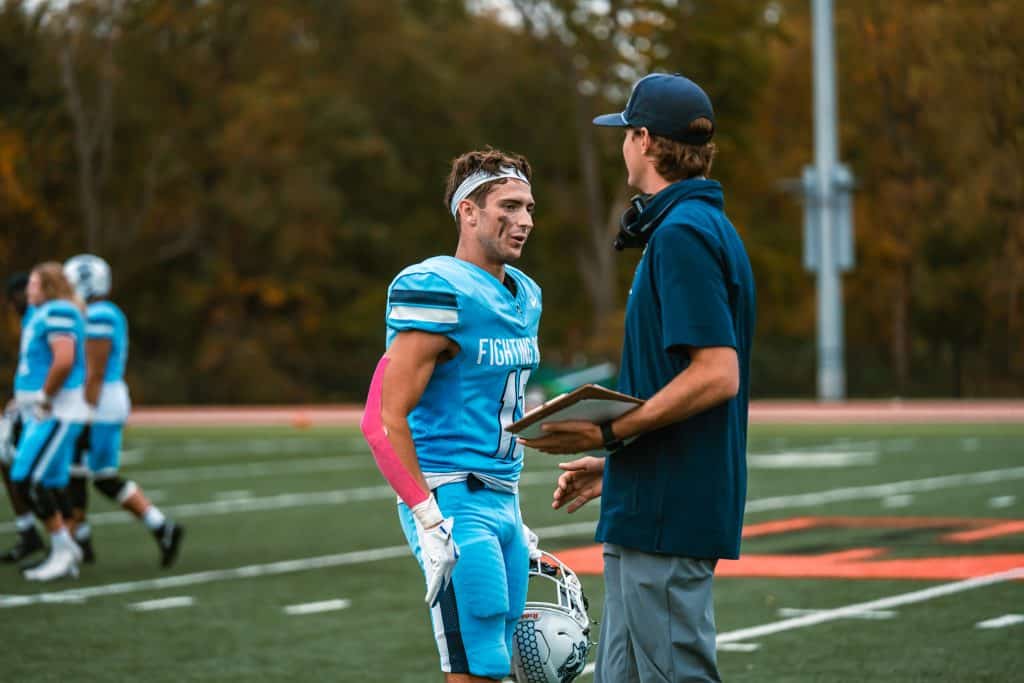
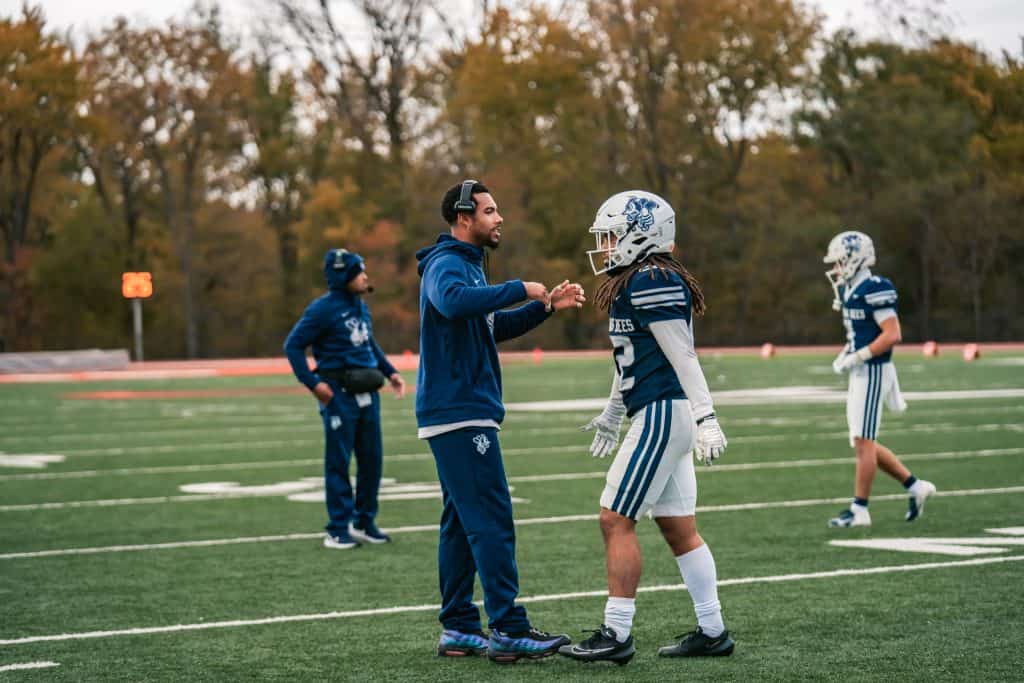
Photo of Grant Macke and Coach Tanner McDonald. Photo Courtesy of Katie Le.
Since 2021, participation in high school sports has declined. The Wall Street Journal reports the number of boys playing a school team sport reaching its lowest level since 2007. WSJ sports columnist, Jason Gay notes that this trend coincides with a broader shift in how young people spend their time: “This is happening, of course, in a decade when young people are spending less time in the physical world, less time with their friends, less time moving around, and more time sitting hunched over a phone.”
This raises an important question- are coaches collegiately concerned about this decline as they work to recruit new players?
Growing Concerns in Athlete Recruitment:
St. Ambrose Football Coach Bernard Buhake says social media has made recruiting more efficient, particularly when it comes to tracking athletes entering the transfer portal.
Buhake explains, “It used to be harder to visit schools and identify prospects, but social media has streamlined the process. Athletes still want to play at the college level, but many aren’t interested in the responsibilities that come with it. That may be part of why fewer students are choosing to attend college now compared to the past.”
Fellow coach Zach Welnetz says finding recruits who truly fit a program remains a challenge, with cost playing a significant role.
Welnetz says, “Recruiting can be difficult because some prospects have very specific expectations during the process. It’s not always easy to find the right fit for the program, and that can make things challenging. We’re also seeing fewer athletes pursue college sports, in part due to rising costs. With St. Ambrose on the more expensive side, that has made recruiting even tougher.”
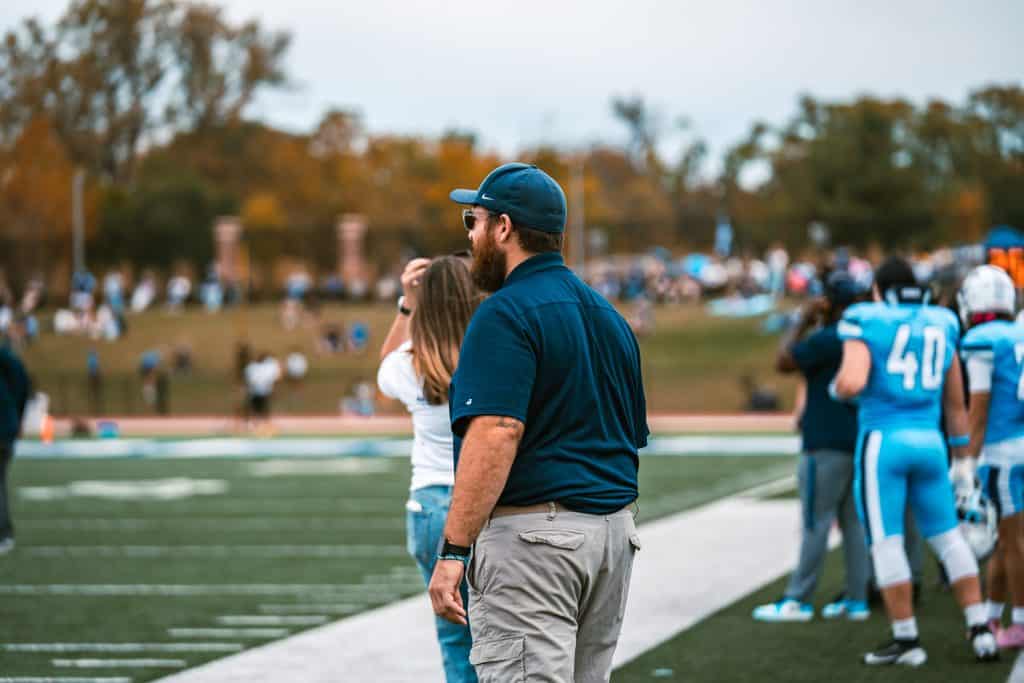
Photo of Coach Greg Ford. Photo Courtesy of Katie Le.
Combining Schools Amid Declining Participation:
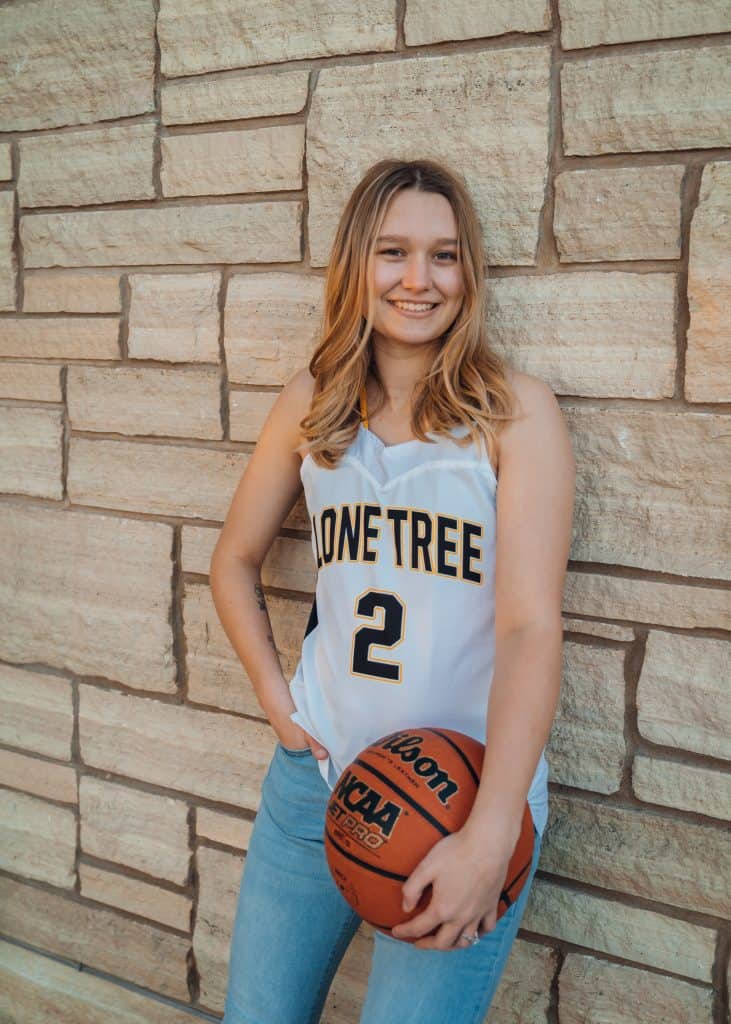
According to the Iowa High School Athletic Association, school districts Lone Tree, Rockford, Highland, Morman Trail, Remsen-St. Mary’s, and Dunkerton all canceled their football seasons before playing a game. Most schools cite low participation, injuries, and safety concerns among athletes.
The Lone Tree district is located an hour away from St. Ambrose University and is experiencing these changes firsthand. Lone Tree High School and Highland districts have decided to combine their football teams to have a season. Last season Highland coach Cory Quail resigned after two games, with a chance to hopefully get the season cancelled due to athletes’ injuries. Lone Tree High School didn’t have enough players for a varsity eight-man team and had to forfeit their season last year. For the fall 2026 season, the school boards decided to combine schools for the football season.
Highland Superintendent Spencer Lueders told Southeast Iowa Union, “If we were going to make a move or shift for next year’s sports season, it needed to be done rather quickly. So that allows our personnel to be figured out, but then also for them to start forging relationships between two communities and two groups of students. It’s important to us that they have great coaching and have a great summer of workouts that leads to hopefully a successful football season.”
Conference Realignment Reshapes Programs
NAIA schools in the broader Chicagoland and Midwest region have shut down or cut athletics due to financial strain, declining enrollment, and shifting priorities. St. Ambrose athletic director Mike Holmes shift to become members of the Heart of America was to ensure our athletes could play their sport.
Holmes says, “We had sports that were in danger of losing automatic qualifiers for Nationals and had our 31 sports spread out over four different conferences. The Heart of America offered us the opportunity to consolidate all of our sports (except swimming) under one umbrella and become full members in a league where all sports were very strong in the area of member sponsorship.”
He continues, “The move was to ensure that our student athletes had opportunities to compete in a stable league with typically two automatic national qualifiers per sport. While we may initially wonder if our recruiting presence in Chicago would suffer, we did some analysis and felt like we would continue to do well there.”
One example of this growing trend is Trinity Christian College, which is set to close following the 2025–2026 academic year.
From recruiting challenges at the college level to high school consolidations and conference realignments, programs at every level are being forced to adapt to new realities shaped by enrollment, finances, and changing student interests. While schools like St. Ambrose University and local high schools continue to adjust through partnerships and restructuring, the closure of institutions such as Trinity Christian College highlights how serious these trends have become.