Photo courtesy of Ellie Seberger
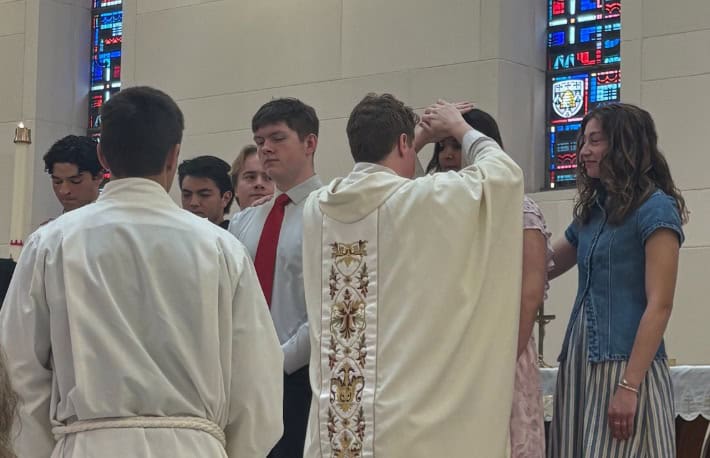
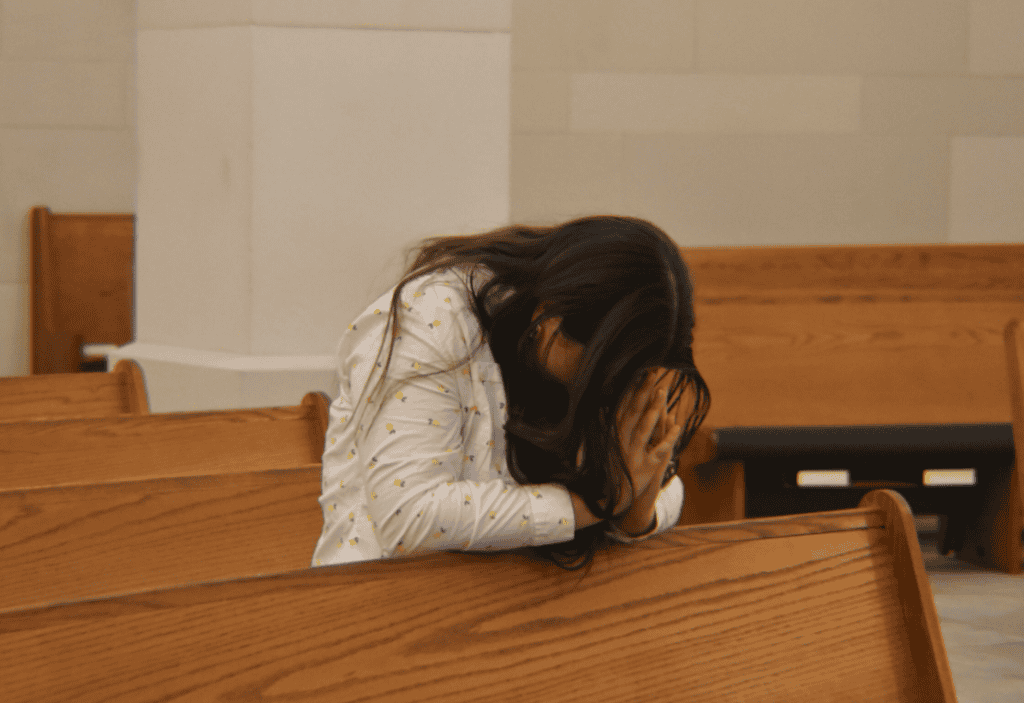
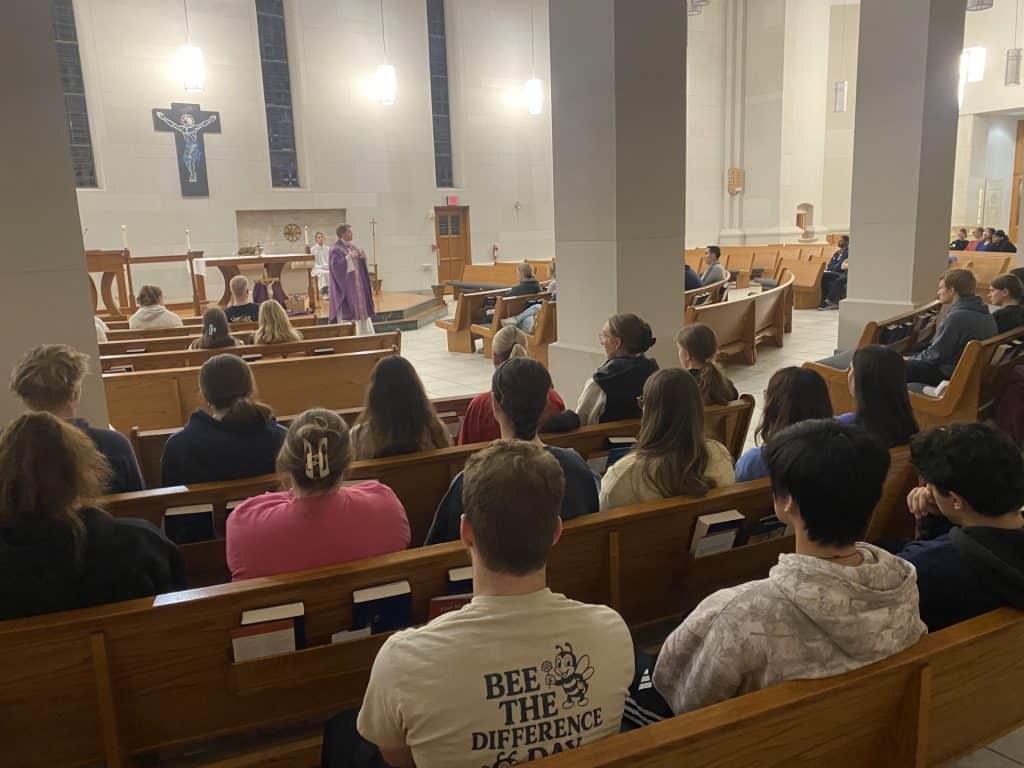
A chapel sits full, but it’s quiet in the way only a divided room can be. Students sit shoulder to shoulder; heads bowed in prayer together, while invisible lines run between the pews. Lines drawn; not by faith but by headlines, political parties and opinions used to put walls up and create division. Sharing the same Sacraments, hearing the same Scripture, and loving the same Lord, yet still starting to see each other as opponents rather than brothers and sisters.
Recent political discourse has increasingly influenced how individuals interact with one another, including within faith communities. Political labels and affiliations can shape conversations and sometimes replace real relationships.
This dynamic raises questions about how political identity intersects with religious identity and how Christians everywhere are called to approach one another within the Church. Christian teaching emphasizes that believers are first united as children of God, baptized into one body and called to love one another. This perspective encourages understanding and compassion rather than political alignment and loyalty.
Many Christians experience tension between political convictions and the call to compassion. Navigating this tension requires balancing personal beliefs with the teachings of the Gospel. The teachings that emphasize love of neighbor, reconciliation, and community. Within this context, believers are encouraged to look beyond political division and reflect on the ways Christ calls them to treat one another.
“A Person’s a Person”
So how do we do this? SAU chaplain Fr. Dale Mallory answers this question.
“Try to have the understanding that at the end of the day, this person is still a person,” he says. “They are still part of the body of Christ, still part of the community.
“I think one of the most awful things that has happened in our current political climate is when you have people cutting off their family members, or cutting off their friends because of a disagreement…one of the biggest things we need as humans is connection with other people, and there are so many people that are lacking that.
“I just think relationships are worth so much more than something like politics,” he finishes.
Fr. Dale’s words highlight the value of maintaining connection and conversation, even when it becomes difficult, awkward, or when perspectives differ.
Living As a Christian Community
Another voice within the SAU community echoes this call to love and compassion and offers a reminder that unity can be included in everyday activities.
“In Christian community, we are blessed to be able to pray, journey through life, learn, grow and take action for the common good with one another,” says St. Ambrose Peace and Justice Director Nicki Gant.
“Whether by attending Mass, a bible study, a peace and justice group meeting or service project, or just supporting each other in our daily struggles and loving each other unconditionally, we have the unique opportunity to live out our faith with one another and support each other on our journey to union with God.”
Support. Together. Union. These words are mentioned frequently in the wisdom from both Fr. Dale and Nicki. In theory, many say this idea is a wonderful image, and an easy target to aim for. However, political differences do exist. People, students do live in a political atmosphere that is has been described as polarized, hateful, and divided. What is the common ground? Nicki Gant offers more insight:
“When Jesus died on the cross, He showed us He is on all of our sides, regardless of the extent of our sins or political beliefs…we are called to pick Christ’s side, who loves all of us equally.”
Finding Common Ground
Nicki explains that Jesus is the common ground. His love for all people is the uniting factor. As Fr Dale explains, “We are called to see each other first as children of God.”
“Acknowledging that God loves us all equally reminds us that Jesus is in every person, every hard conversation, and every goal of unity and love,” adds SAU Junior Jaxson Eisenbarth. “It is important to bring Christ to the front of our minds when we talk to others because then we see Him in them, and we can act from a place of Divine love rather than human pride.”
In a world that can push people to choose sides, Fr. Dale, Nicki, and Jaxson say choose love. Not passive, flat love but courageous, radical love. A selfless love that listens before it labels, and that seeks understanding before it seeks to win.
Jaxson Eisenbarth encourages students to “remember who we are, and whose we are: Children of God.”
Leaders say unity becomes more than just a belief; it becomes a daily habit. Being united in Christ means saving a seat at the table for anyone and everyone, and it means staying at the table when it is easier to walk away. Unity and Christian love turn the attention from the sides one is on, to the way that one loves. They add that by choosing Christian unity, the love so desperately needed can be discovered.